Direct NTRIP vs Network Tunnel: GB30 Connection Guide
Choose a correction-data connection for your GB30 deployment. Compare reachable direct NTRIP endpoints with network tunnel access that avoids public IP addresses, port forwarding and dedicated lines.
Compare reachability, compatible client software and capacity requirements before choosing how industrial RTK devices connect to GB30.
Start with the correction data path
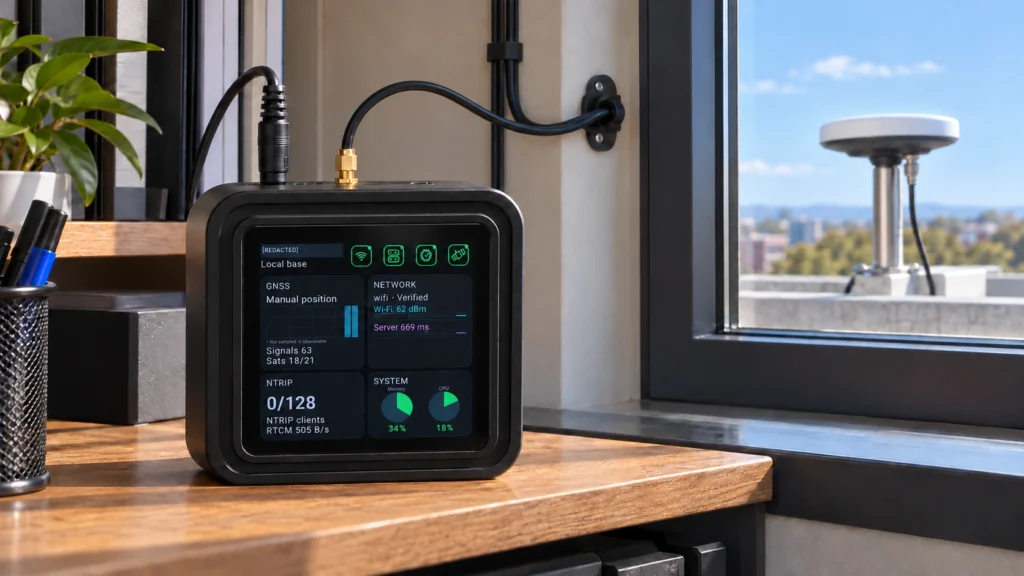
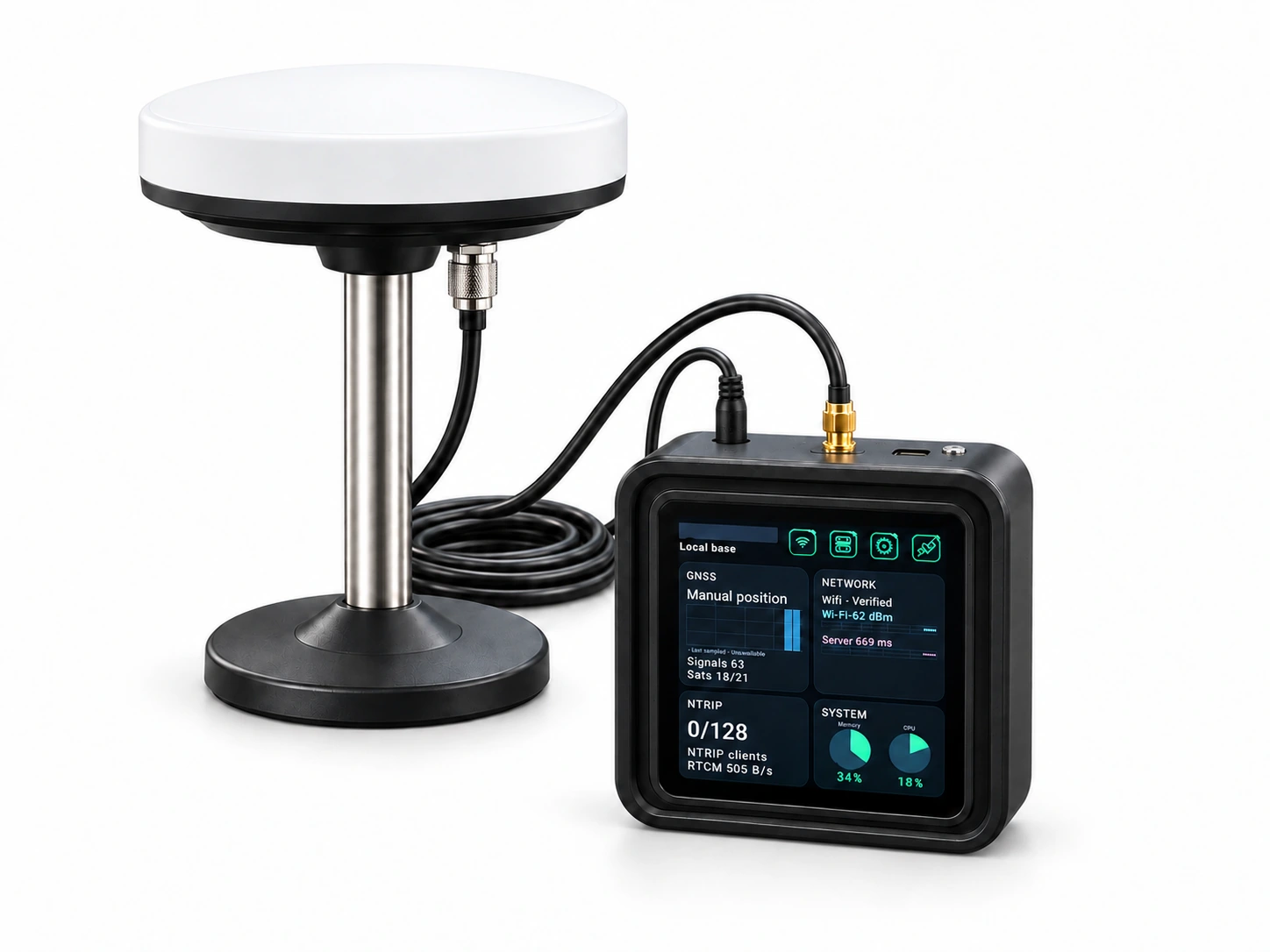
A GNSS reference station generates observations for compatible field equipment. The NTRIP Caster distributes the selected reference stream to connected clients. In Local Base Station mode, GB30 combines its own reference source and the Caster in one low-power ARM device. The field receiver, application and network path still need to work together.
When direct NTRIP fits
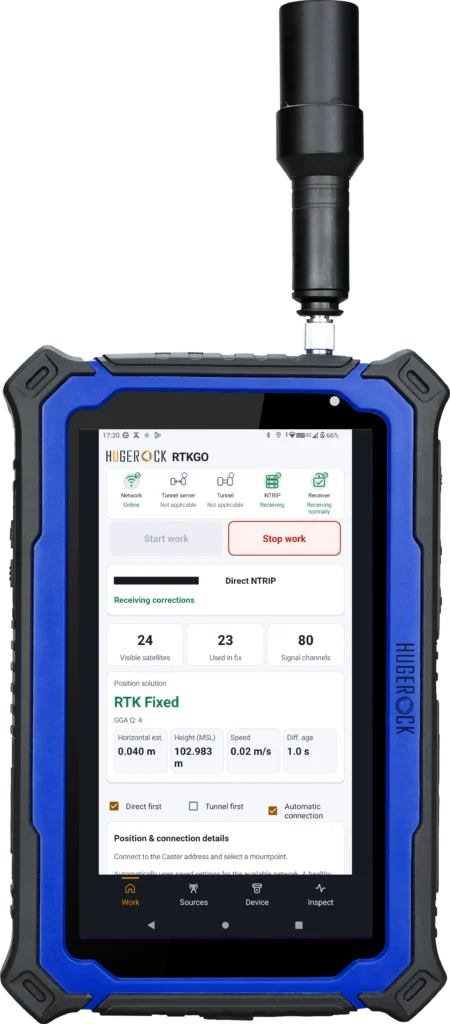
Choose direct NTRIP when the Caster is reachable by the intended receivers. This can be a suitable local network or a public access arrangement. Specify the address, port, mountpoint and credentials, and test the actual client equipment. A network connection alone does not confirm that valid corrections reach the receiver.
When a network tunnel helps
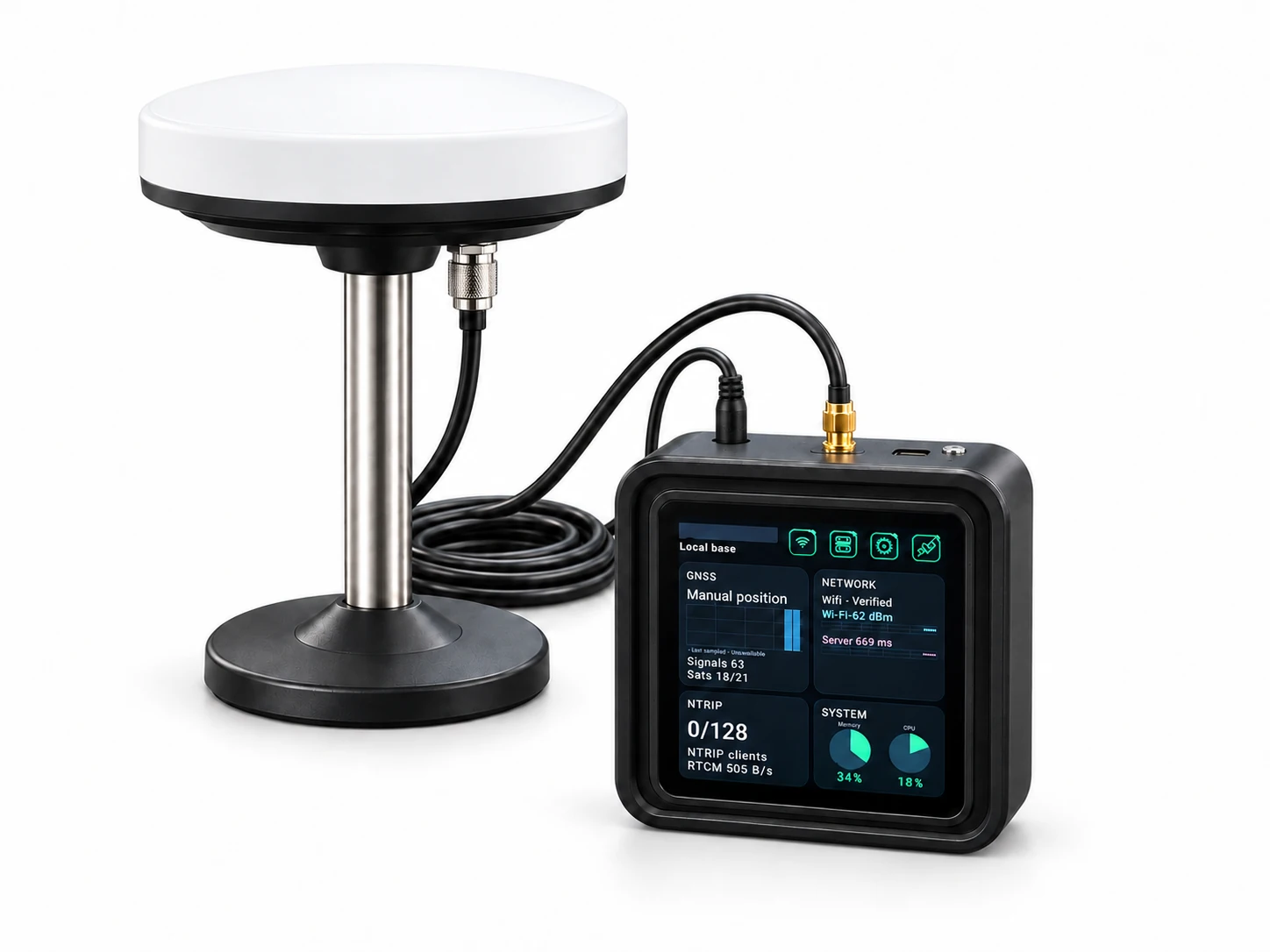
GB30 network tunnelling avoids a dedicated public IP, port forwarding and a dedicated line. Ordinary internet access and compatible tunnel client software remain necessary. Check the connection method on the exact RTK terminal or host application used in your deployment.
Separate default capacity from the maximum
The normal configuration allows 256 client terminals and eight uplink reference stations. GB30 can support up to 4,000 simultaneously online clients in direct NTRIP mode under a raised connection policy. That maximum is not the default setting and is not a tunnel capacity claim. Confirm tunnel capacity and service conditions for the intended project.
Keep the source identity clear
The central GB30 can serve its own local source and independent accepted uplink sources. An 8 + 1 layout makes nine reference points available; the streams are not fused into a VRS network. Source selection does not imply automatic nearest-station selection or seamless roaming.
Agree the evaluation before ordering
Record the connection method, client software, planned simultaneous load, mountpoint configuration and acceptance criteria. Check receiver solution status, correction age and independent control observations in representative working locations. Include ordinary network access and any service terms in the procurement scope.
Questions to resolve when choosing the network path
Is a network tunnel the same as an offline correction link?
No. A tunnel still requires ordinary internet access, service reachability and compatible client software. It avoids a dedicated public IP and router port-forwarding setup; it does not remove the data connection.
Can the 4,000-client limit be used for tunnel planning?
No. The 4,000 simultaneous-client maximum applies to direct NTRIP mode. The default policy is 256 terminals and eight uplink stations. Confirm tunnel compatibility and deployment capacity separately.
Related: GB30 GNSS base + NTRIP Caster kit · GB30 installation and technical support · Plan a multi-station reference network