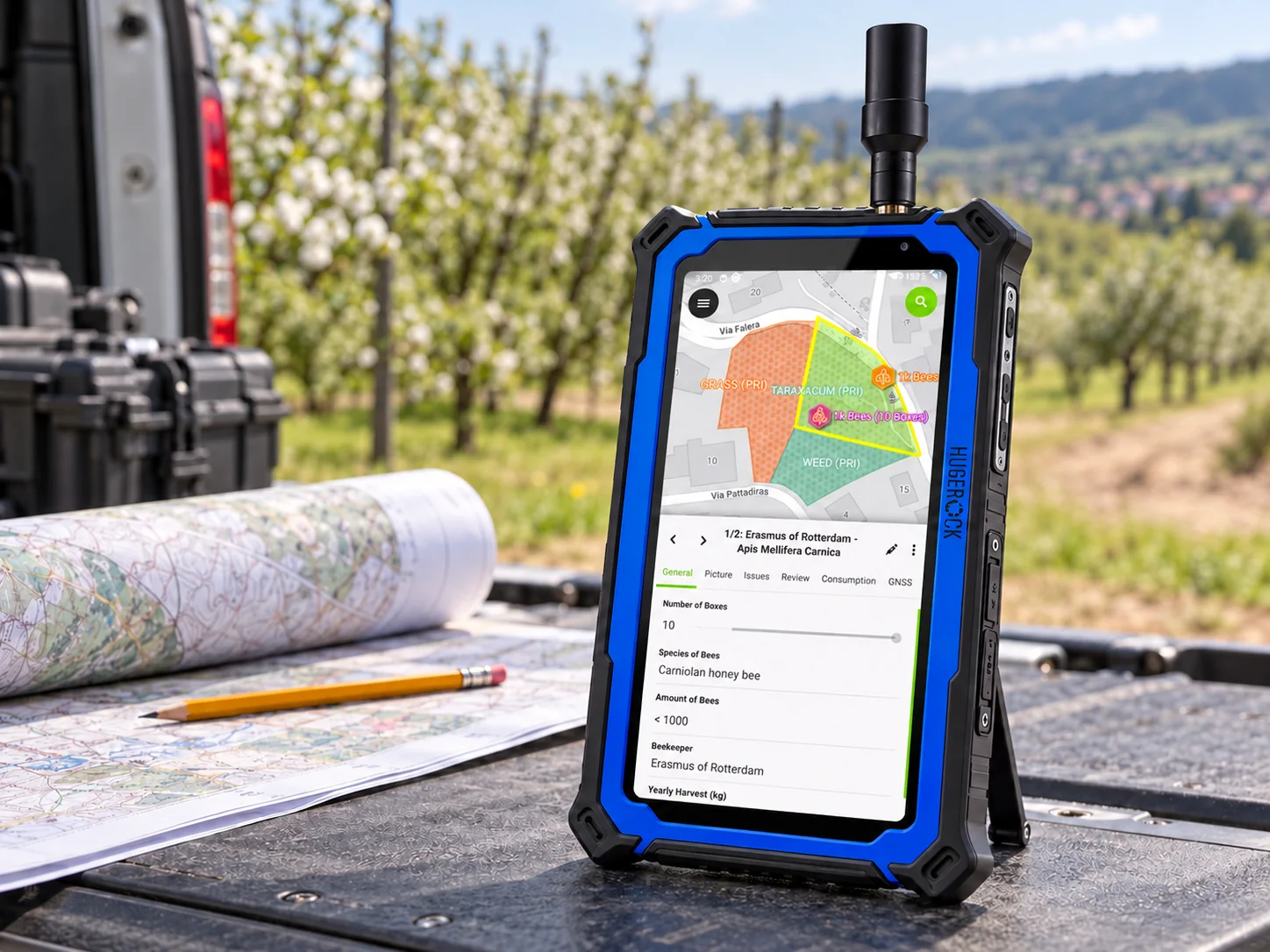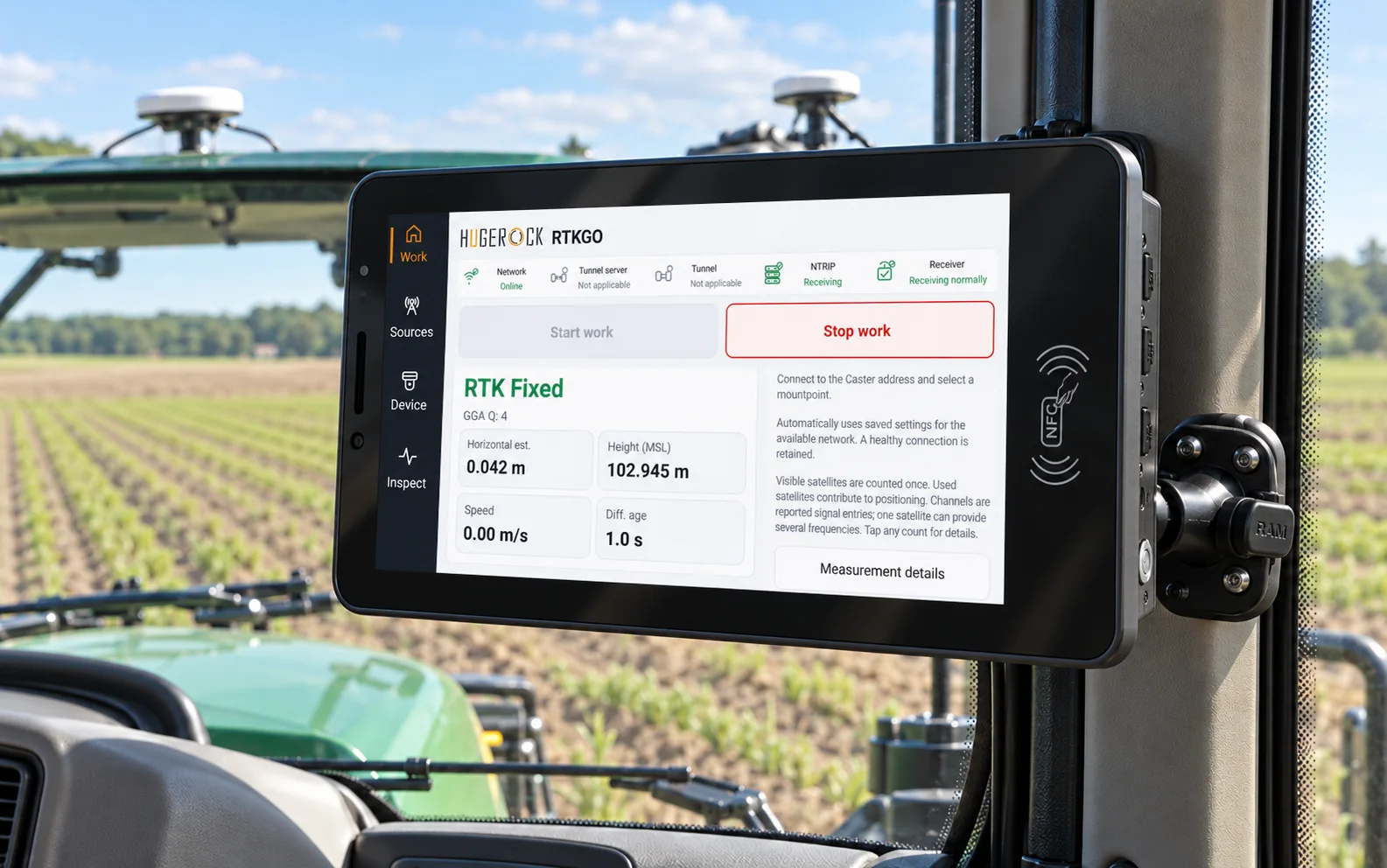
Reference infrastructure. Professional RTK devices.
HUGEROCKRTKGO Request a quote ↗
GB30 / REFERENCE INFRASTRUCTURE TO FIELD OPERATIONS

RTK solutions.
Built around real work.

Plan your GNSS reference base, NTRIP Caster and professional RTK devices around the way your teams and machines operate.

Explore practical deployment examples for surveying, GIS, precision agriculture, construction, vehicle positioning, outdoor robotics and multi-site reference networks.

Complete reference kitDirect NTRIP / compatible tunnelIndustry-specific acceptance checks
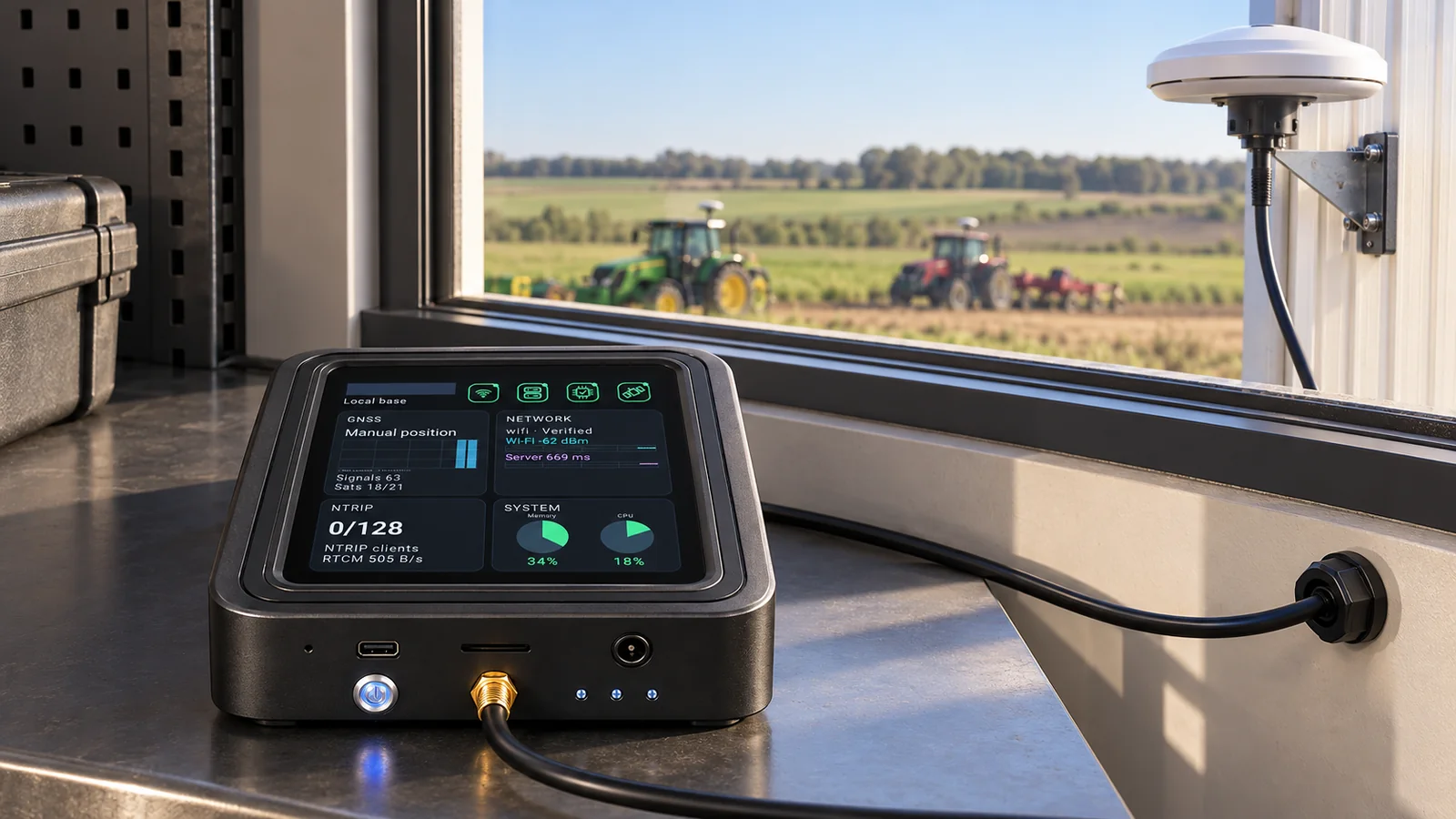
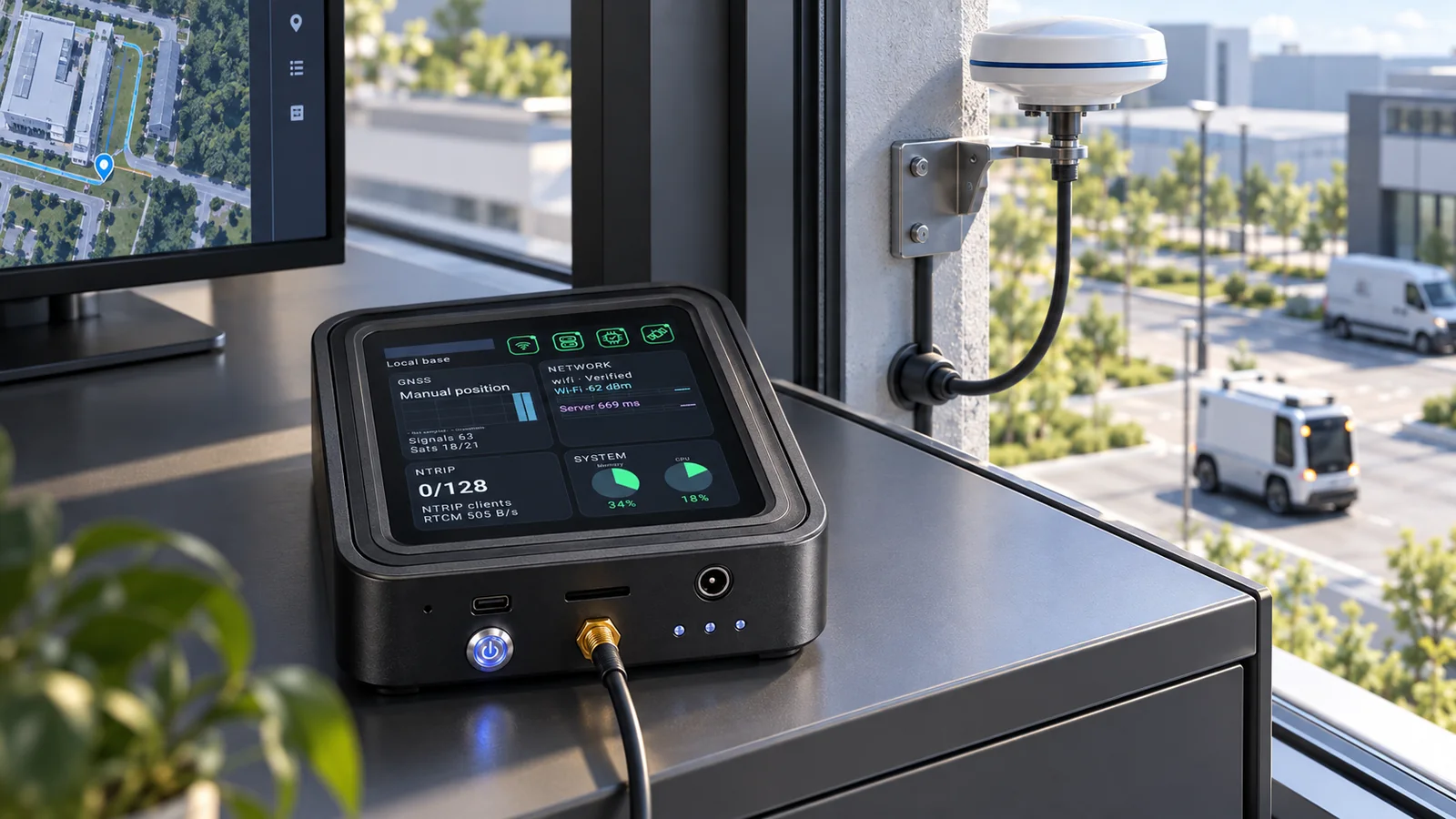
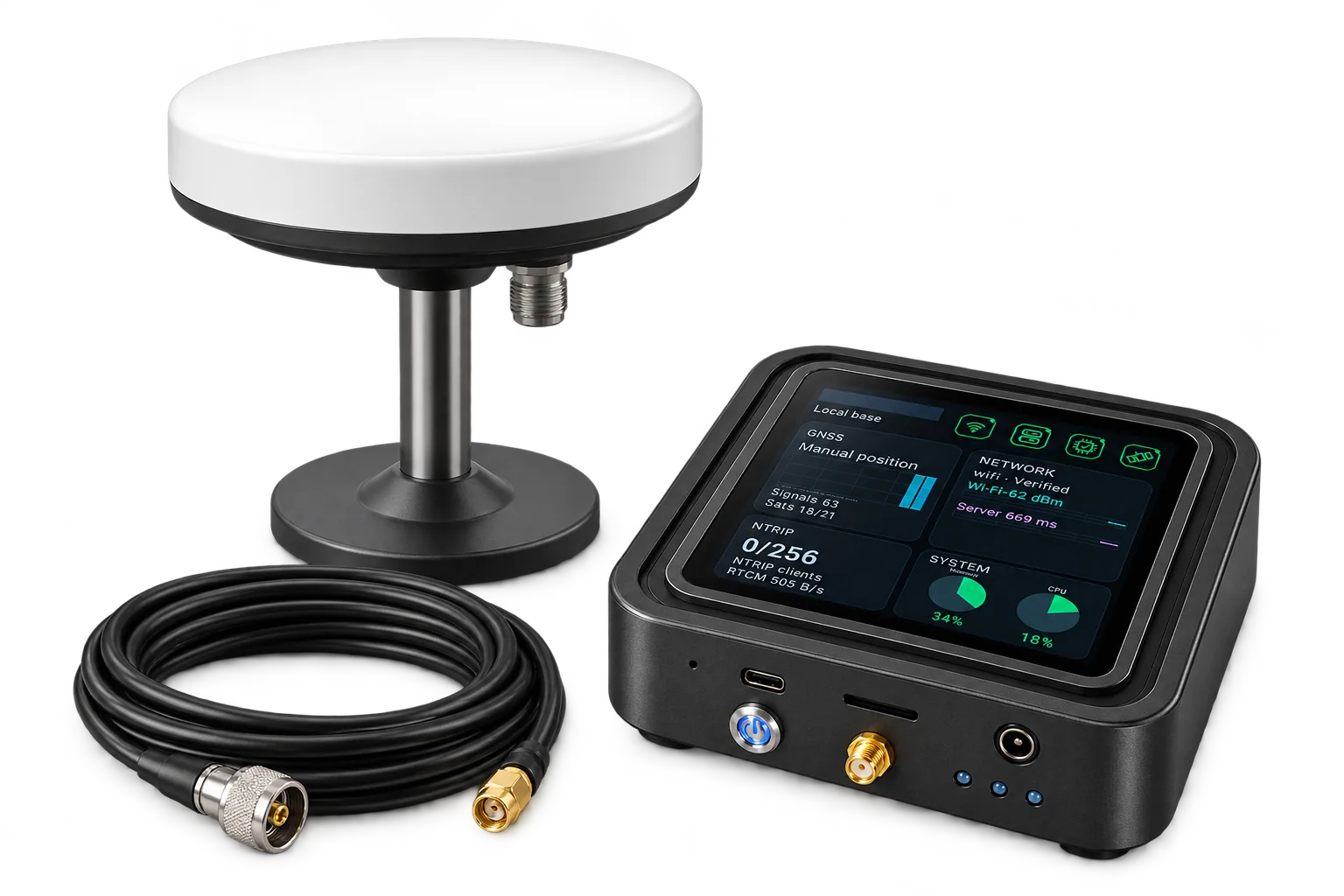
GB30 complete GNSS reference kit with main unit, external antenna, mounting stand and coaxial cable
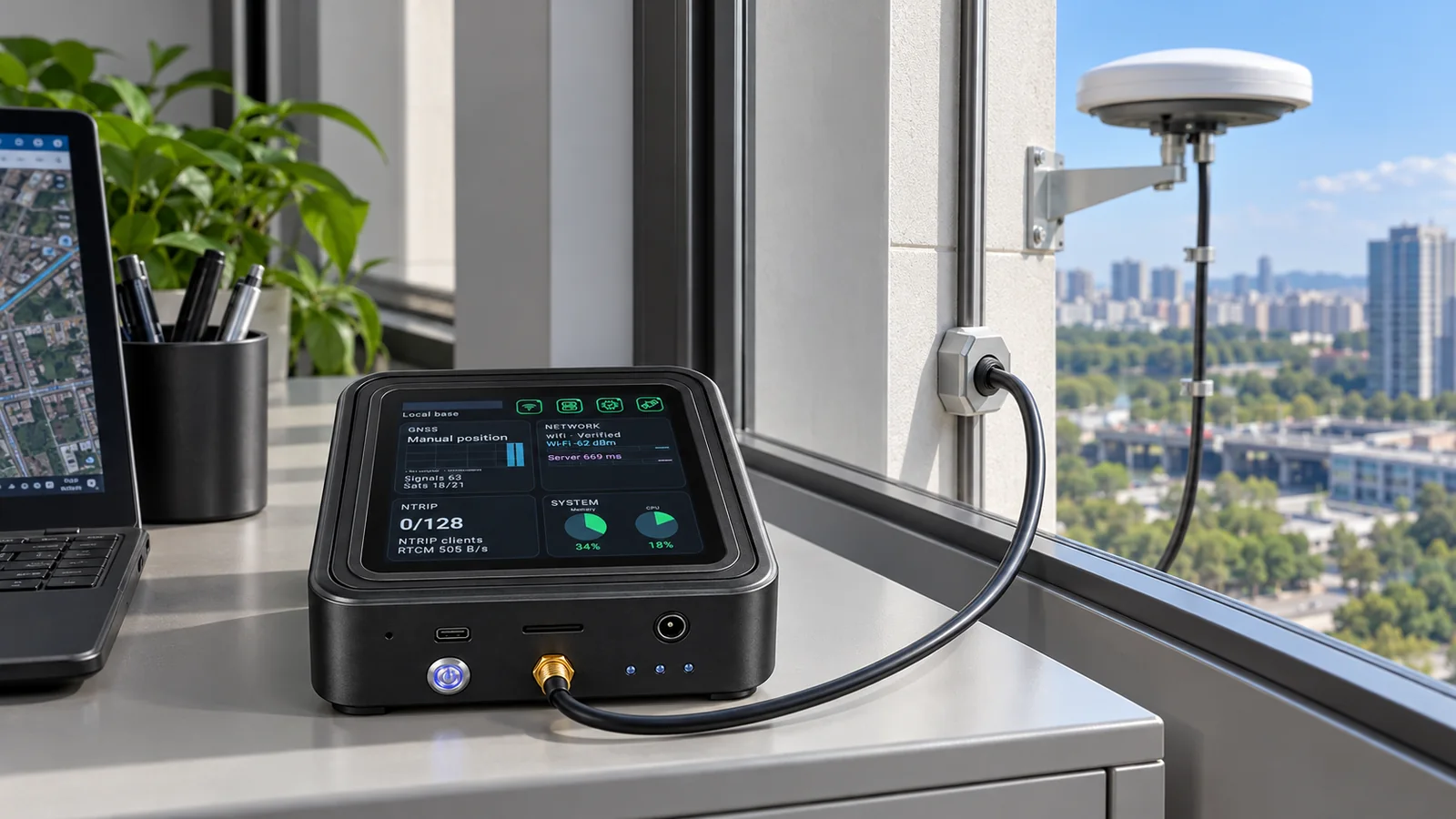
GB30 complete kit · fixed indoor main unit / outdoor reference antenna
APPLICATIONS & DEPLOYMENT EXAMPLES

Choose the workflow.
Then define the system.

Each solution outlines the field task, reference architecture, suitable device choices and the checks to include in a project trial.

BUYER'S DEPLOYMENT GUIDE

Match the architecture
to the operating area.

Explore GB30 capabilities →
Operating needReference approachField-side decision
Repeat surveying or site checksOne validated fixed reference source with a local GB30 Base + Caster.Rover or RTK handheld, accepted coordinates and independent control checks.
Utility routes and distributed assetsChoose an appropriate source for each route or district.GIS application, attribute schema, coordinate handling and synchronization.
Farm or vehicle operationsA stable fixed source and a validated mobile correction path.Machine receiver, power, antenna arrangement, heading and host interfaces.
Outdoor robot fleetsA reference source matched to the validated operating area.Robot receiver integration and application response to degraded positioning.
Several independent work areasA central local-mode GB30 and accepted uplink reference stations.Source assignment, simultaneous clients, station records and operational checks.
MULTI-STATION RTK REFERENCE NETWORKS

One local source.
Eight independent uplinks.

A typical 8 + 1 GB30 layout has nine fixed reference points. The central GB30 serves its own local source and the eight uplink sources through its integrated NTRIP Caster.

Start with the project geography, accepted baselines, reference sites and client load. Approximately 10km station spacing is a planning example; validate actual coverage and positioning requirements.

REFERENCE NETWORK 8 + 1
U01U02U03U04U05U06U07U08GB30L00 + CASTER
A CLEAR PROCUREMENT PATH

From an application
to an accepted deployment.

  1. 01

    Define the work

    Identify the users or machines, work area, positioning requirements and field application.

  2. 02

    Choose the reference

    Agree the fixed locations, source identities, network path and simultaneous client requirement.

  3. 03

    Verify the field system

    Match receivers, devices, antennas, power, interfaces and application data handling.

  4. 04

    Run an acceptance trial

    Use representative routes, independent checks and clear handover records before scaling.

RTK REFERENCE TERMS

Know what each
part of the system does.

GNSS reference base
A fixed antenna and receiver arrangement that supplies an accepted reference source.
NTRIP Caster
The service that makes reference streams available to compatible NTRIP clients.
Mountpoint
The named source a client selects from the Caster's available streams.
Uplink reference station
A remote GB30 source sent to a bound local-mode GB30 Caster. Sources remain independent.
RTK field client
A compatible receiver or system that uses reference corrections in its positioning workflow.
SOLUTION PLANNING / COMMON QUESTIONS

Start with the right questions.

What does a GB30 RTK reference solution include?

Each GB30 complete reference kit includes the GB30 main unit, external GNSS antenna, antenna mounting stand and coaxial antenna cable. The project also needs suitable power, network access, installation and compatible field receivers or terminals.

How is a GNSS reference base different from an NTRIP Caster?

The reference base generates reference observations or correction data from a fixed GNSS antenna. The NTRIP Caster distributes reference streams to clients. In Local Base Station mode, GB30 combines the reference source and Caster in one ARM device.

How do I choose between a single site and multiple reference stations?

Start with the working area, accepted baseline, site conditions and positioning requirements. One fixed source may suit a validated local area; separate work areas can use independent uplink sources served by a central GB30. Validate coverage and source selection for the project.

Can the same reference service support different types of RTK equipment?

Compatible RTK handhelds, field tablets, rovers, agricultural or vehicle receivers and robot-side positioning systems may use the service. Confirm correction format, NTRIP or tunnel compatibility and the application integration for each client.

Tell us what needs to work in the field.

Share your application, operating area, reference sites and intended client load.

Request a solution configuration ↗

Compare selected devices.