The operating challenge
Farm-scale deployment must account for reference-site stability, mobile network availability, receiver compatibility and machine power. Delivering correction data is only one part of a complete guidance or steering system.
 RTKGO
Request a quote ↗
RTKGO
Request a quote ↗
Build the reference layer for a compatible agricultural positioning system. Keep the base installation fixed and evaluate machine terminals, antennas, power and application integration together.
For: Farm operators, agricultural equipment distributors and machine-system integrators
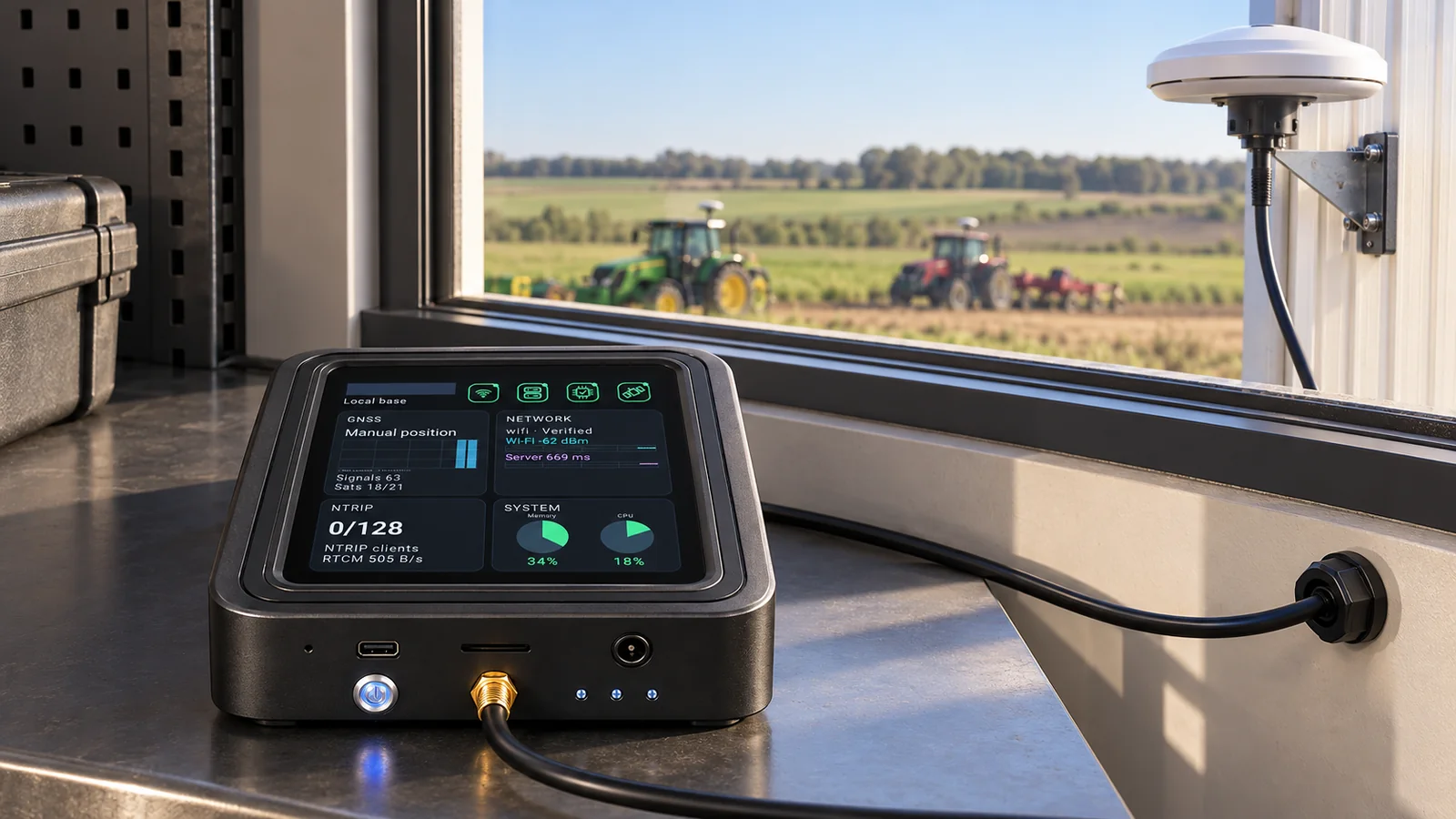
A farm operates several machines from a central service building. The outdoor reference antenna is mounted at a stable site and connected to an indoor GB30. Compatible agricultural RTK receivers obtain corrections from the farm's selected source, while the integrator validates the vehicle installation and task requirements in representative fields.
Farm-scale deployment must account for reference-site stability, mobile network availability, receiver compatibility and machine power. Delivering correction data is only one part of a complete guidance or steering system.
Begin with one GB30 complete kit at the fixed reference location. Use direct NTRIP where the correction service is reachable. A compatible tunnel can avoid dedicated public-IP and port-forwarding requirements. Separate farm locations may require additional independent sources and site validation.
Check the outdoor antenna location, stable coordinates, weather exposure of installation accessories and indoor power arrangement.
Test network reachability and correction continuity along representative field routes with the intended machine receiver.
For GK101M, confirm external DC power, mounting, serial or network connections and the required external receiver antennas.
Use the machine supplier's procedure to evaluate positioning, heading where required, loss of corrections and recovery behavior.
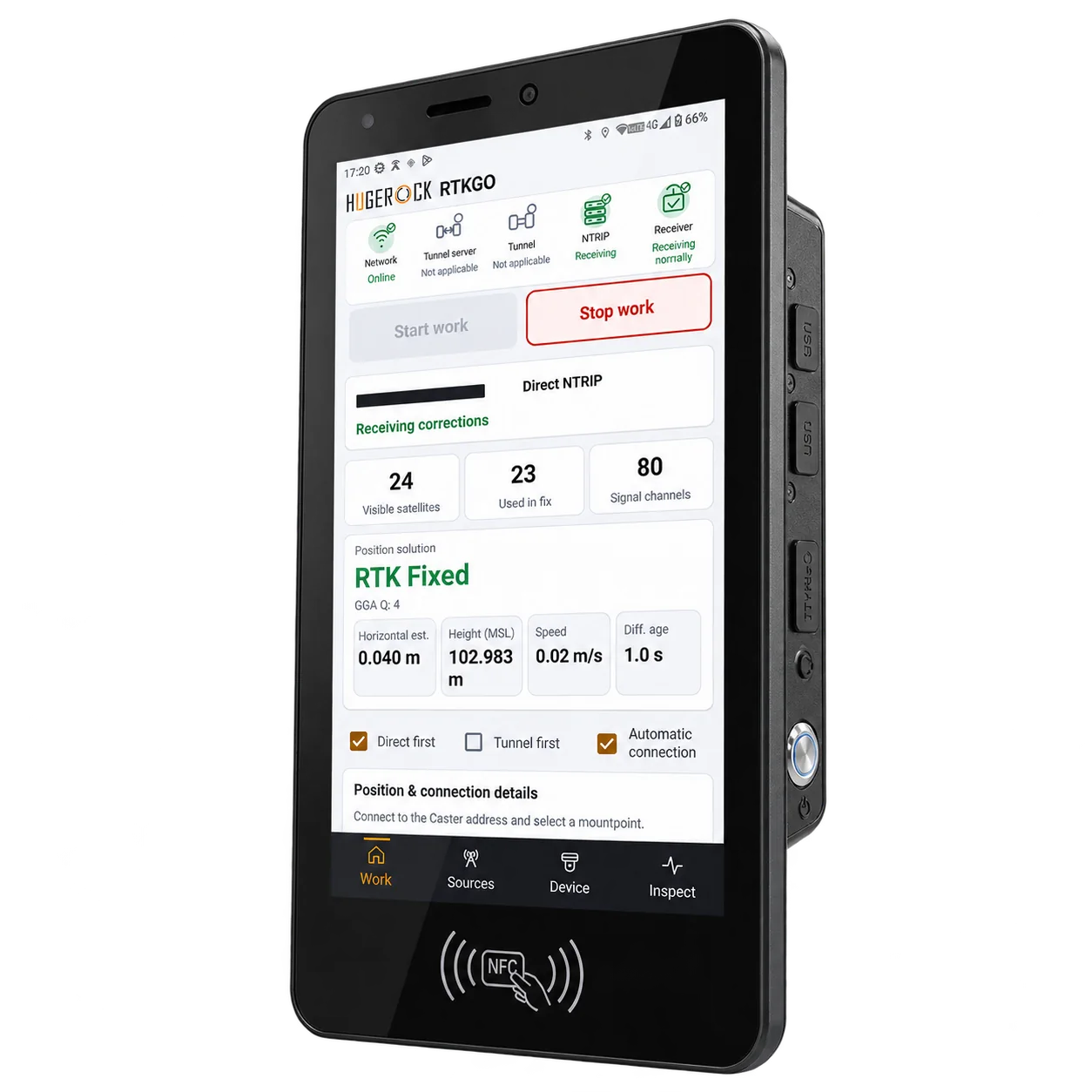
Vehicle-mounted RTK terminal
Review specifications →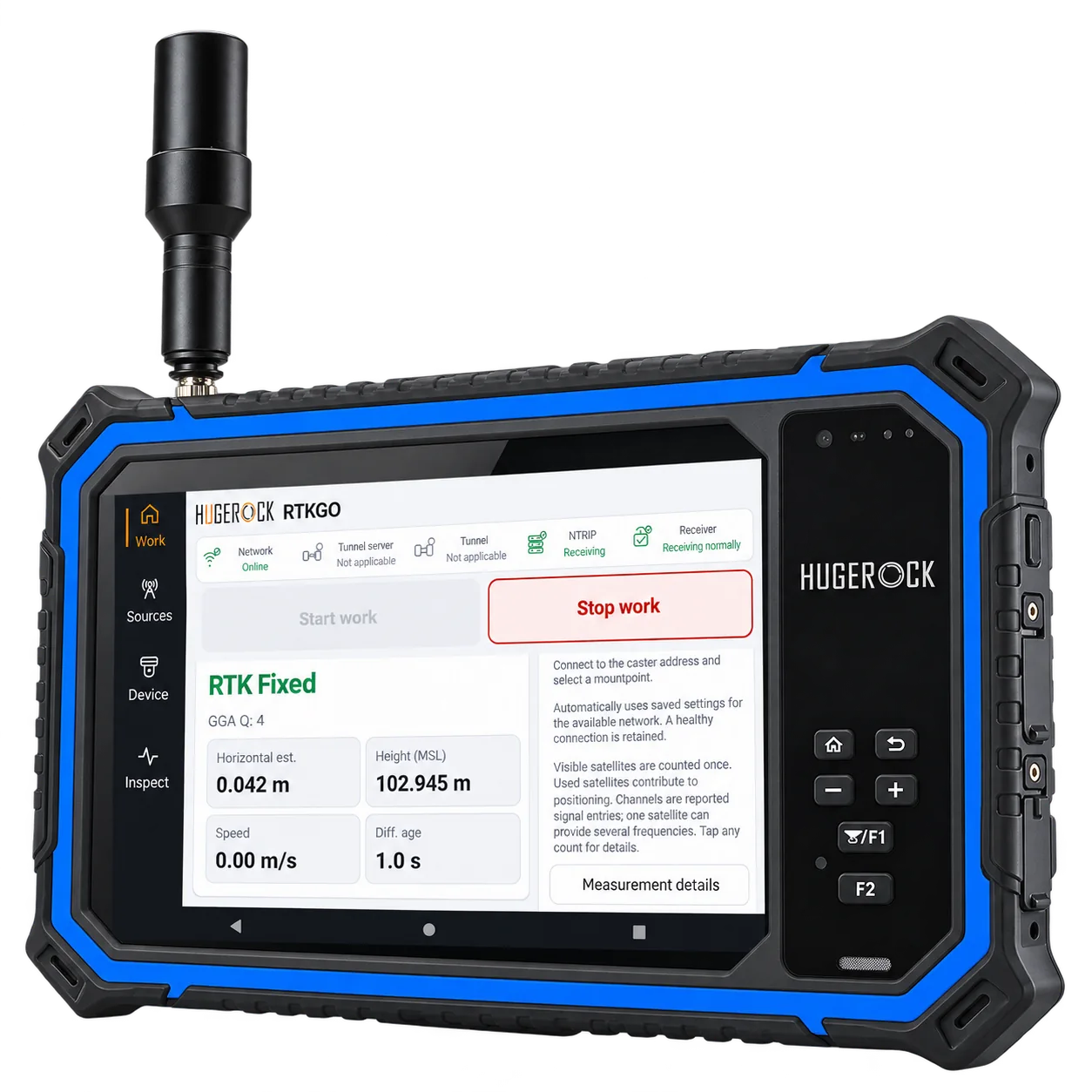
Landscape RTK field tablet
Review specifications →Confirm the shipping configuration, field application, receiver access and installation requirements. Robot-side and machine-side receivers may be separate industry equipment.
No. GB30 supplies reference correction infrastructure. Guidance, steering control, machine interfaces and operational safety belong to the selected agricultural system.
GK101M integration uses its specified external antenna and receiver arrangement. Dual-antenna heading needs two suitable antennas and a defined baseline; these vehicle-side items are separate from the GB30 reference kit.
Yes, the network tunnel is intended to avoid a dedicated public IP, port forwarding and a dedicated line. Ordinary internet access, compatible clients and a deployment-specific capacity check remain necessary.
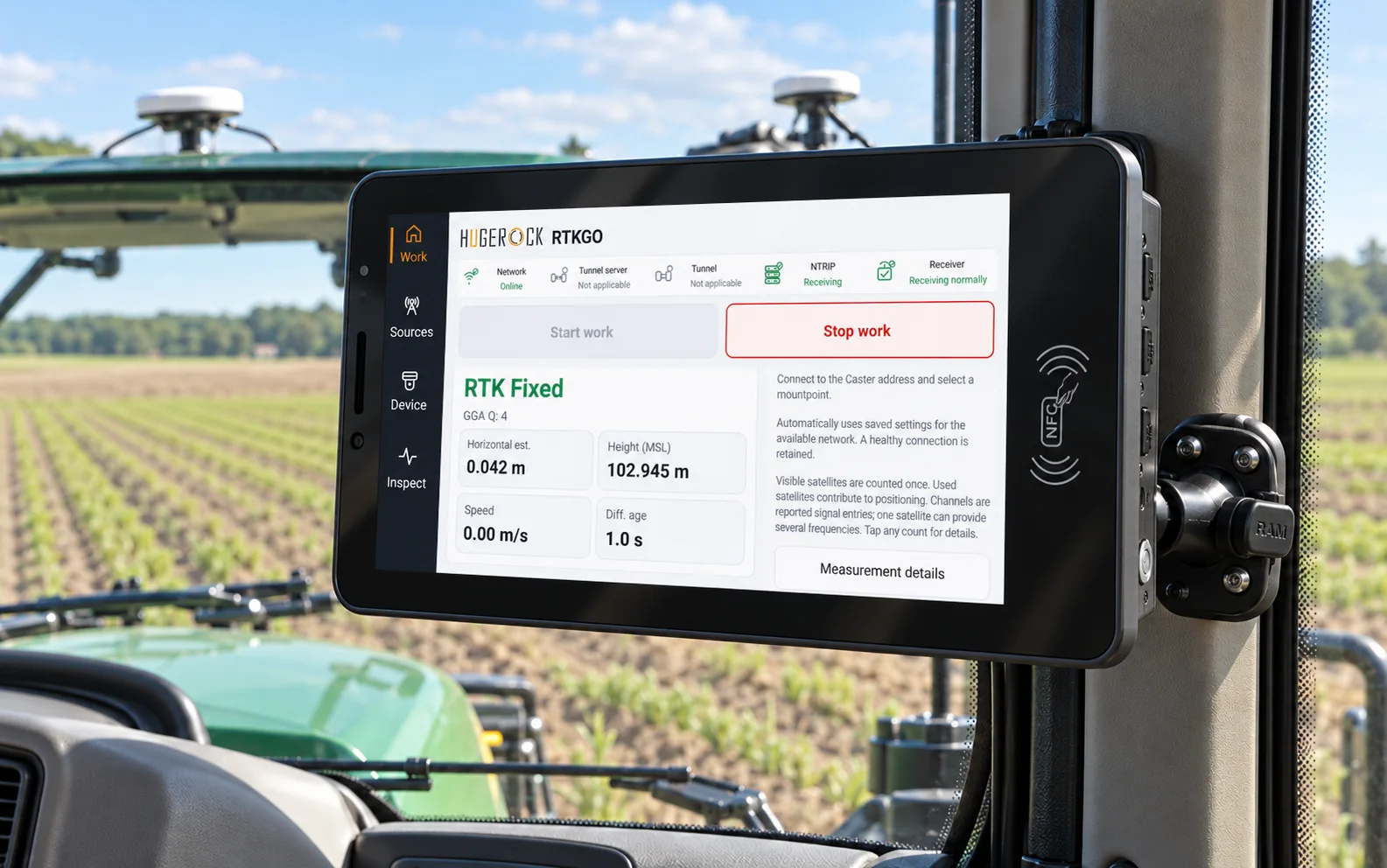
Combine an appropriate reference source with a vehicle terminal, antenna arrangement and host interface. Treat power, positioning, heading and application behavior as one integration review.
Explore this solution →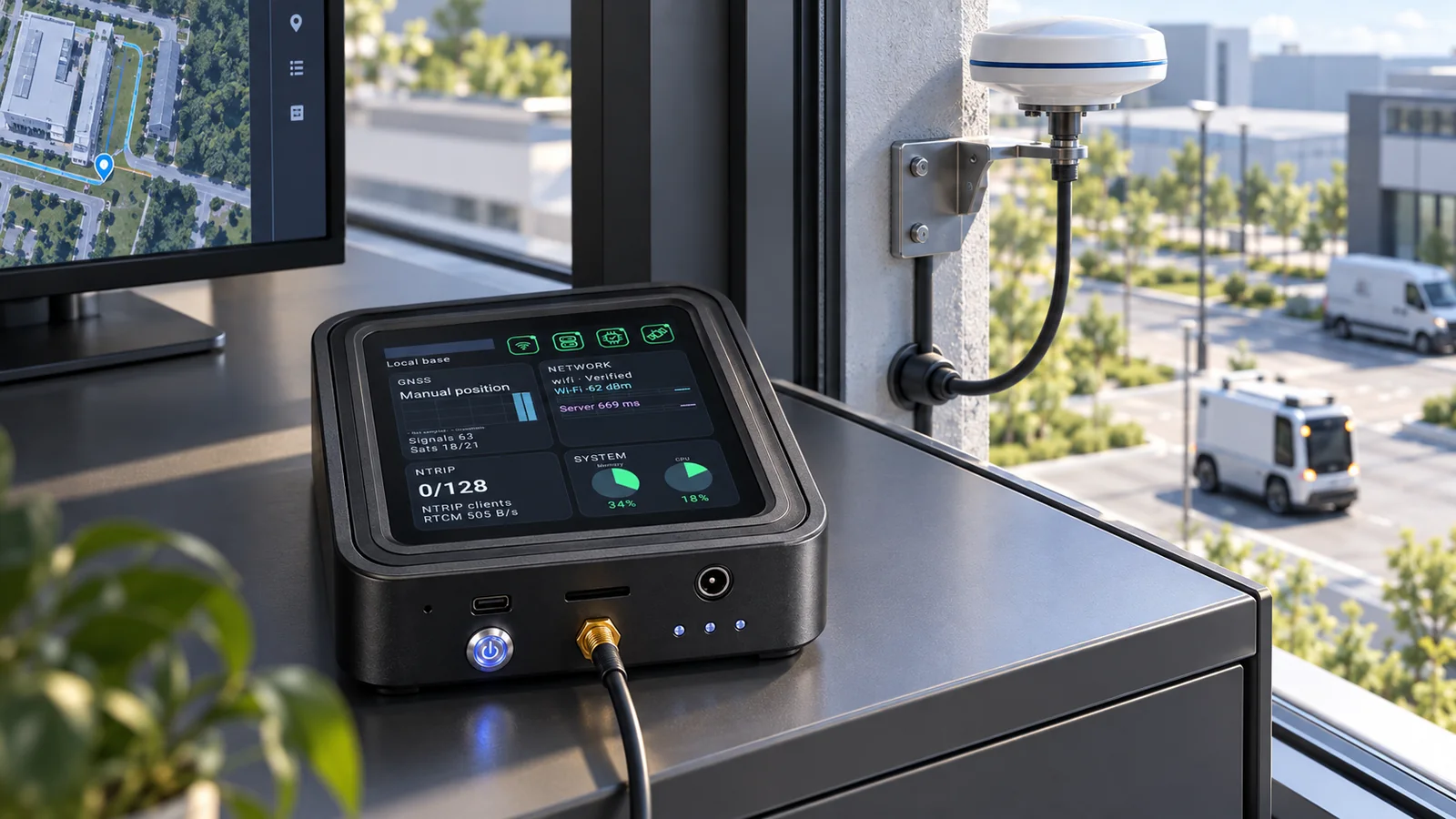
Give compatible robot receivers access to a known GNSS reference source. Validate the reference, network and receiver behavior together with the robot's localization and control system.
Explore this solution →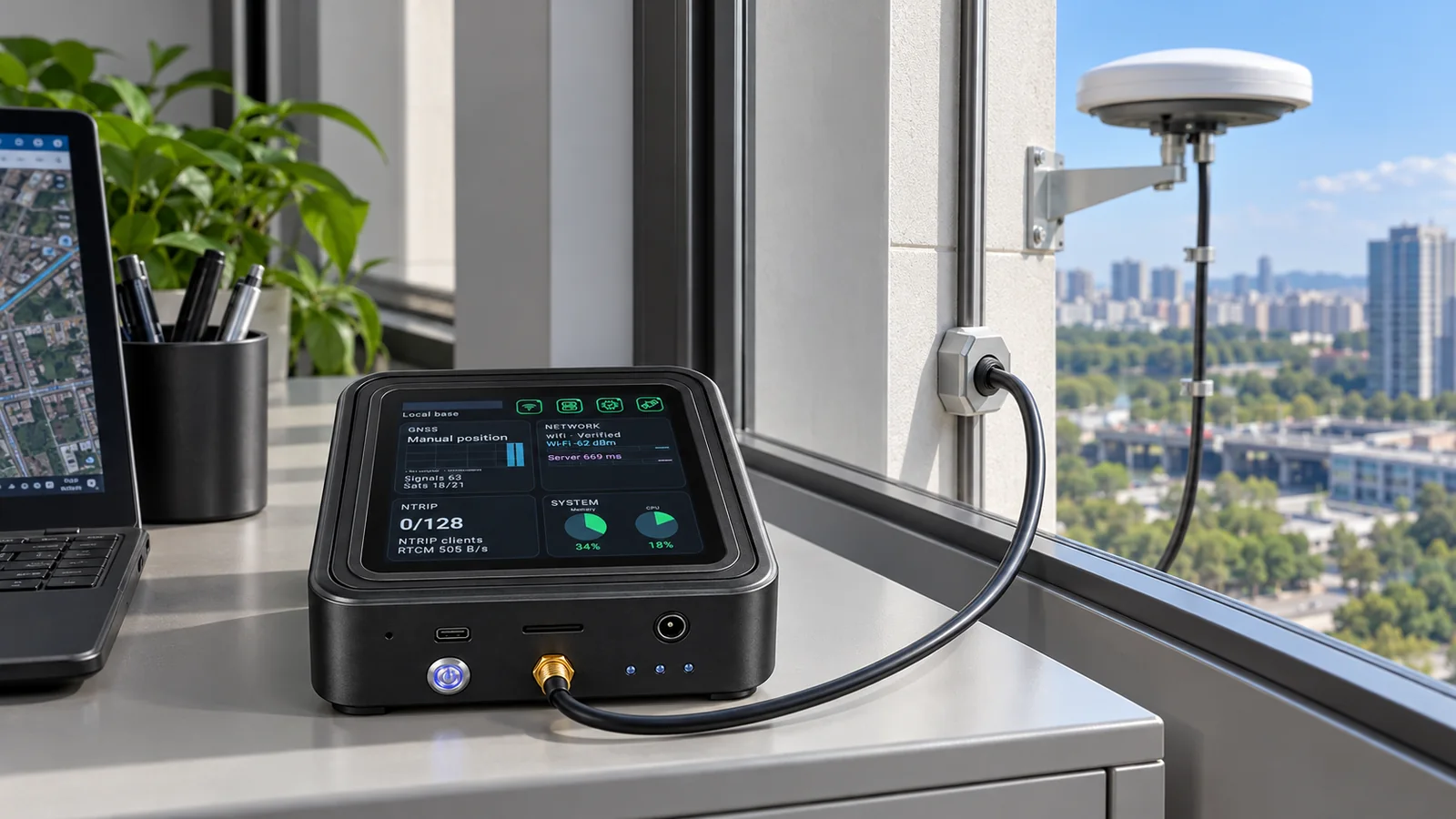
Connect multiple fixed reference points to a central GB30 in Local Base Station mode. Serve its own local source and independent uplink sources through the integrated NTRIP Caster.
Explore this solution →