The operating challenge
A successful vehicle installation depends on more than the receiver specification. Antenna geometry, cable routing, vehicle electrical conditions and the host application's data contract all need verification.
 RTKGO
Request a quote ↗
RTKGO
Request a quote ↗
Combine an appropriate reference source with a vehicle terminal, antenna arrangement and host interface. Treat power, positioning, heading and application behavior as one integration review.
For: Vehicle OEMs, equipment builders and positioning-system integrators
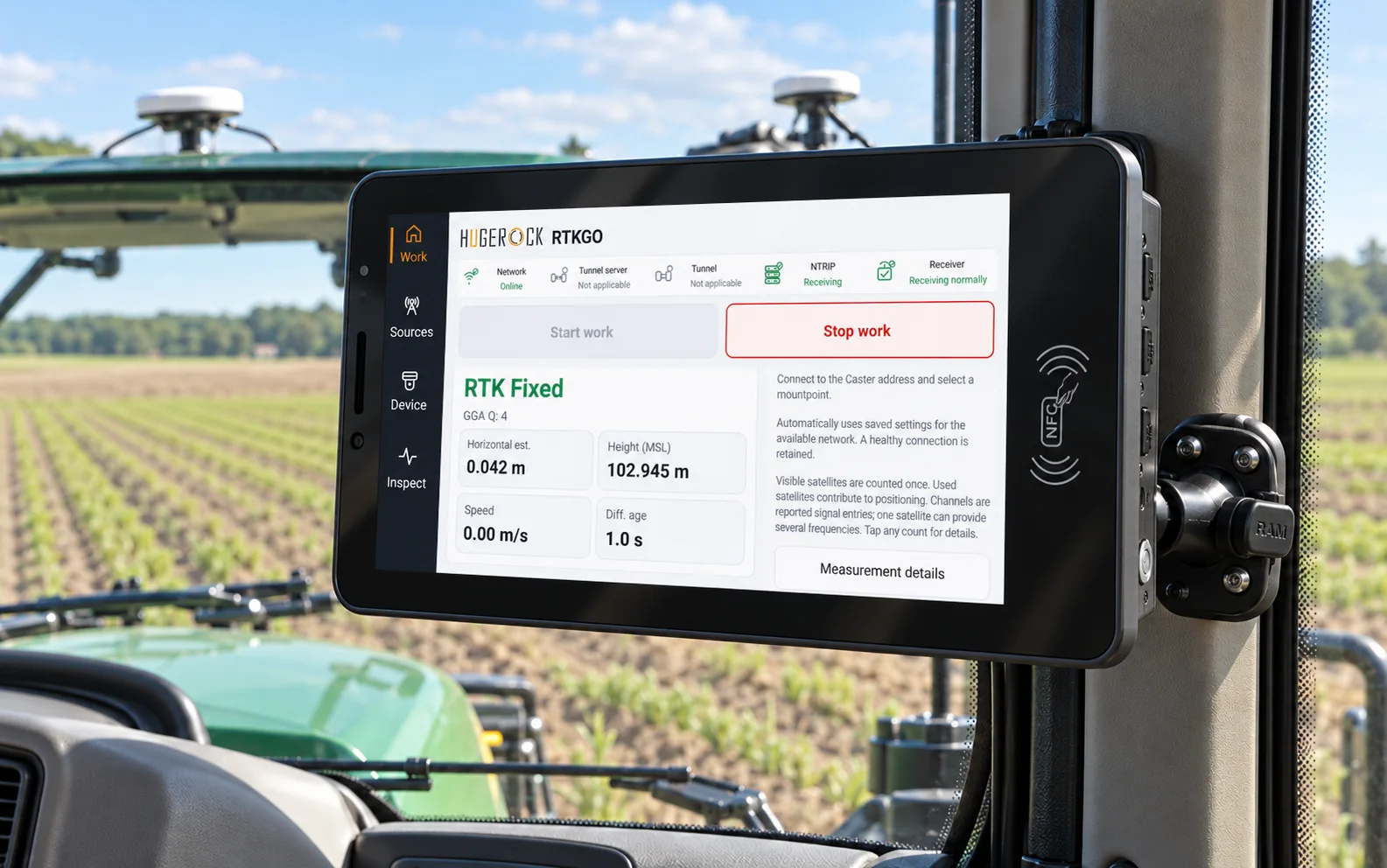
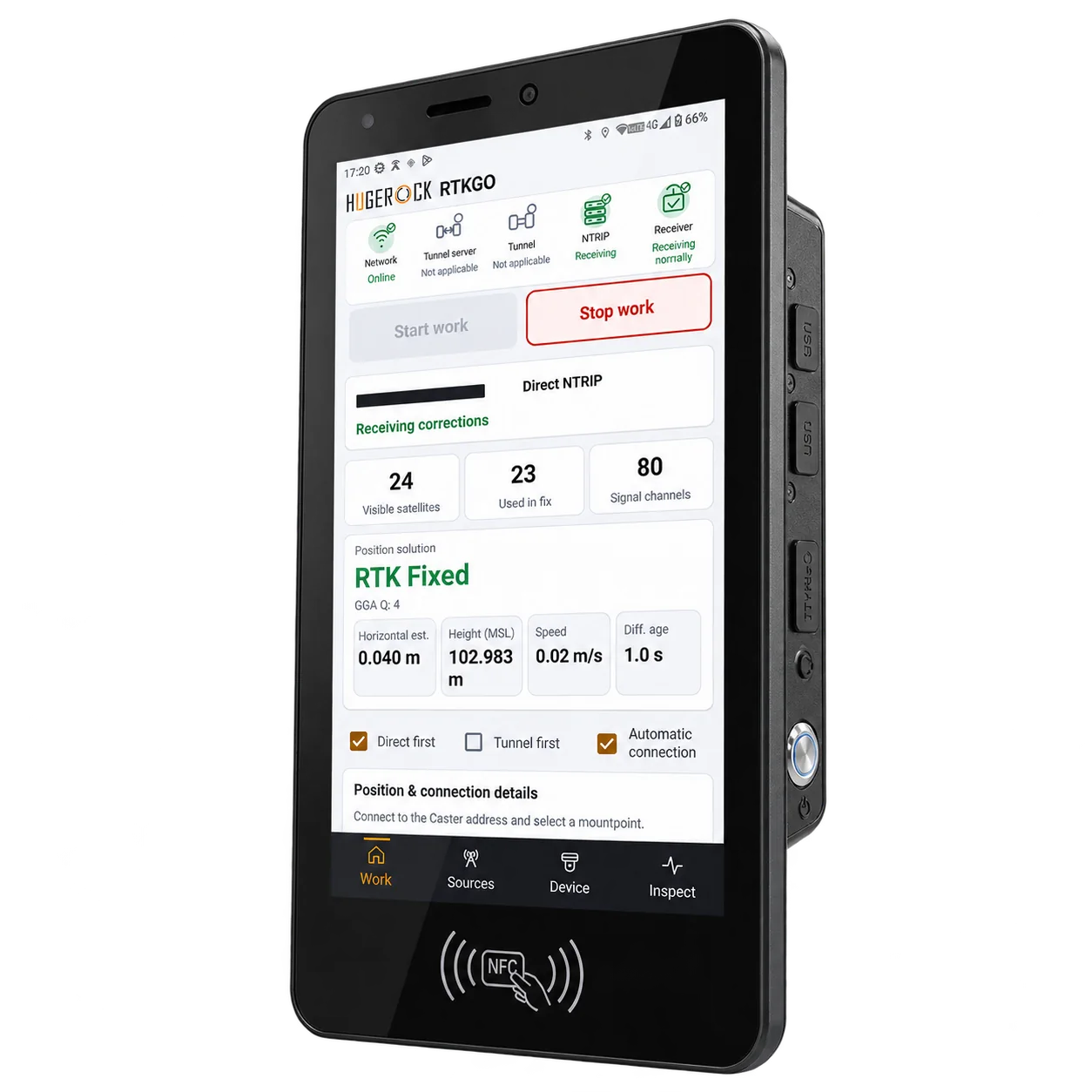
An equipment builder evaluates a cab-mounted positioning terminal for a fleet platform. GB30 supplies a fixed reference source for the trial area. A GK101M installation connects vehicle power and the required interfaces, while the integrator validates antenna placement, heading baseline and data delivery to the host application.
A successful vehicle installation depends on more than the receiver specification. Antenna geometry, cable routing, vehicle electrical conditions and the host application's data contract all need verification.
Keep the GB30 reference kit fixed at the reference site. Install GK101M in the vehicle with its separately specified vehicle antennas, protected external power and appropriate serial or Ethernet connections. Confirm the client-side NTRIP or tunnel path before acceptance.
Agree positioning and heading outputs, update requirements, interface pinouts and the application's handling of quality flags.
Specify the antenna pair where heading is required, their orientation and baseline, cable routes and mounting stability.
Check the external input, protection, grounding, connector retention and startup or shutdown behavior.
Evaluate positioning and heading output, correction loss and recovery, data logging and host application behavior on the intended vehicle.
Confirm the shipping configuration, field application, receiver access and installation requirements. Robot-side and machine-side receivers may be separate industry equipment.
The selected GK101M configuration requires external power and has no built-in battery. Confirm its specified DC input and the complete vehicle-side power design.
The published GK101M heading specification is 0.1° RMS at a 1m antenna baseline. Validate the actual antenna installation and operating conditions rather than applying that figure to every baseline.
No. The reference and terminal provide positioning-related infrastructure and outputs. Vehicle control, perception, functional safety and the operational system are separate integration responsibilities.
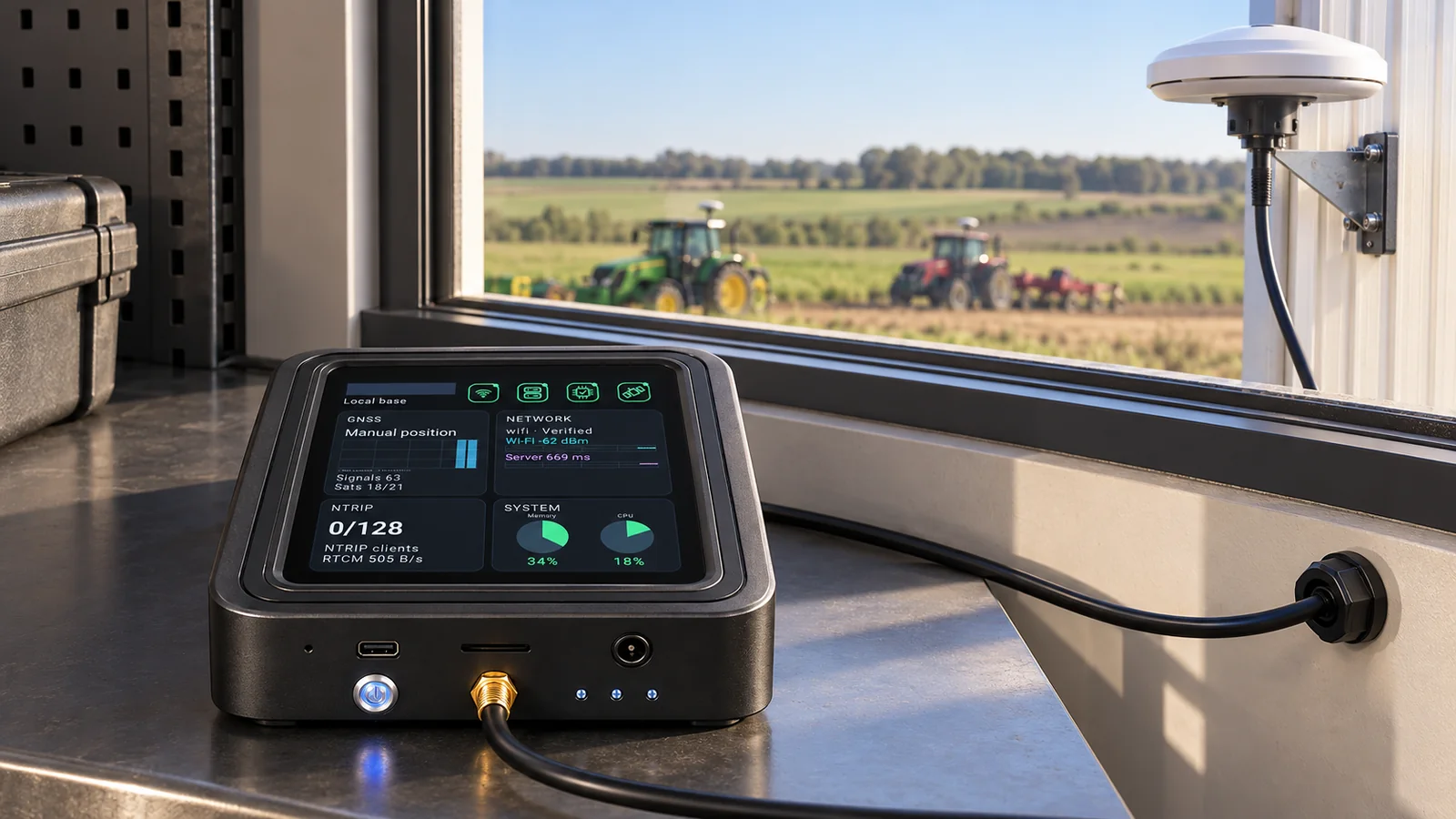
Build the reference layer for a compatible agricultural positioning system. Keep the base installation fixed and evaluate machine terminals, antennas, power and application integration together.
Explore this solution →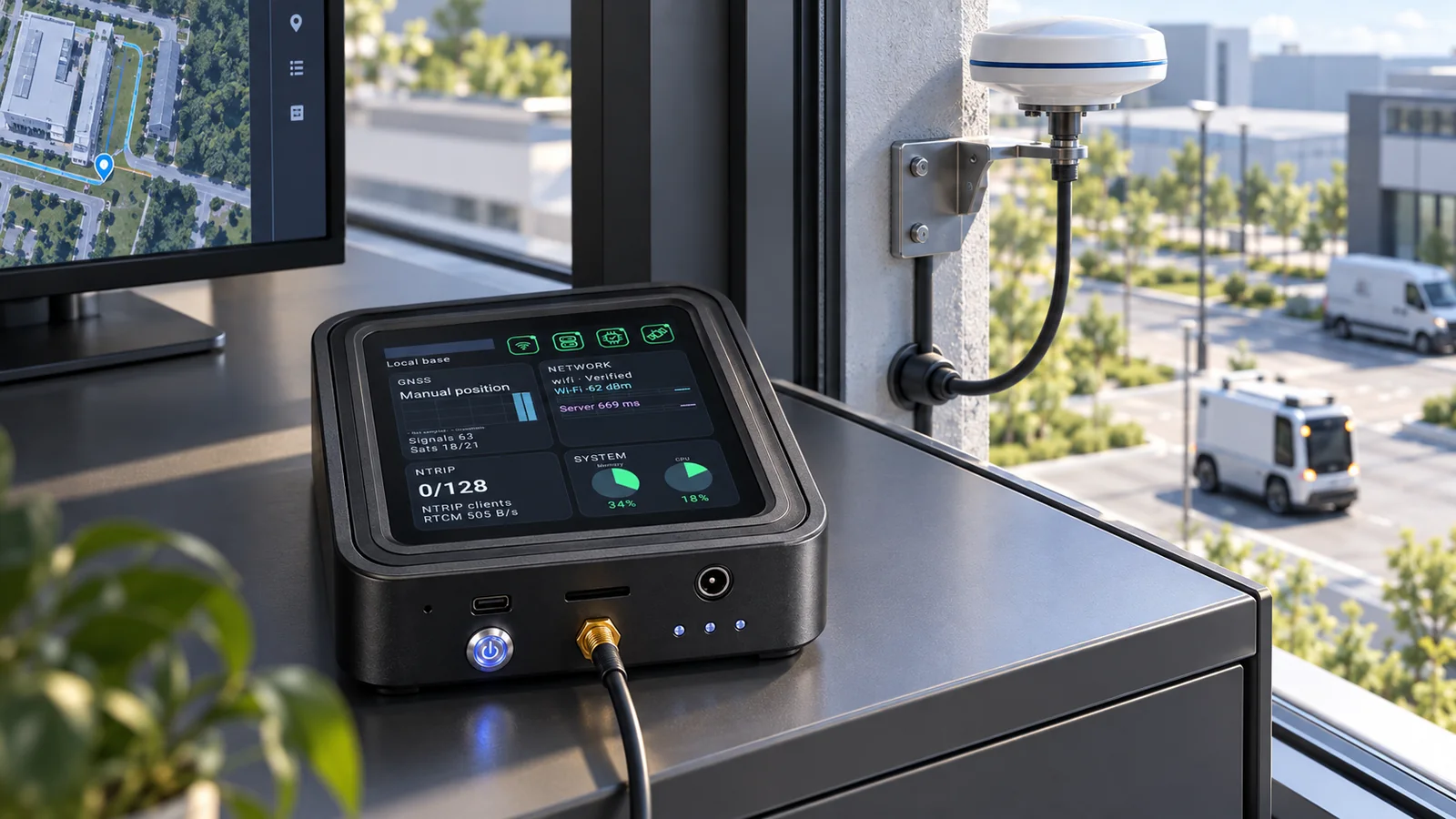
Give compatible robot receivers access to a known GNSS reference source. Validate the reference, network and receiver behavior together with the robot's localization and control system.
Explore this solution →
Connect multiple fixed reference points to a central GB30 in Local Base Station mode. Serve its own local source and independent uplink sources through the integrated NTRIP Caster.
Explore this solution →